
Sale & Rent Back Claims
Sold your home and rented it back? If you sold below market value, were promised long-term security, later faced eviction or were not told about safer alternatives, your case may deserve a free review.

What happened
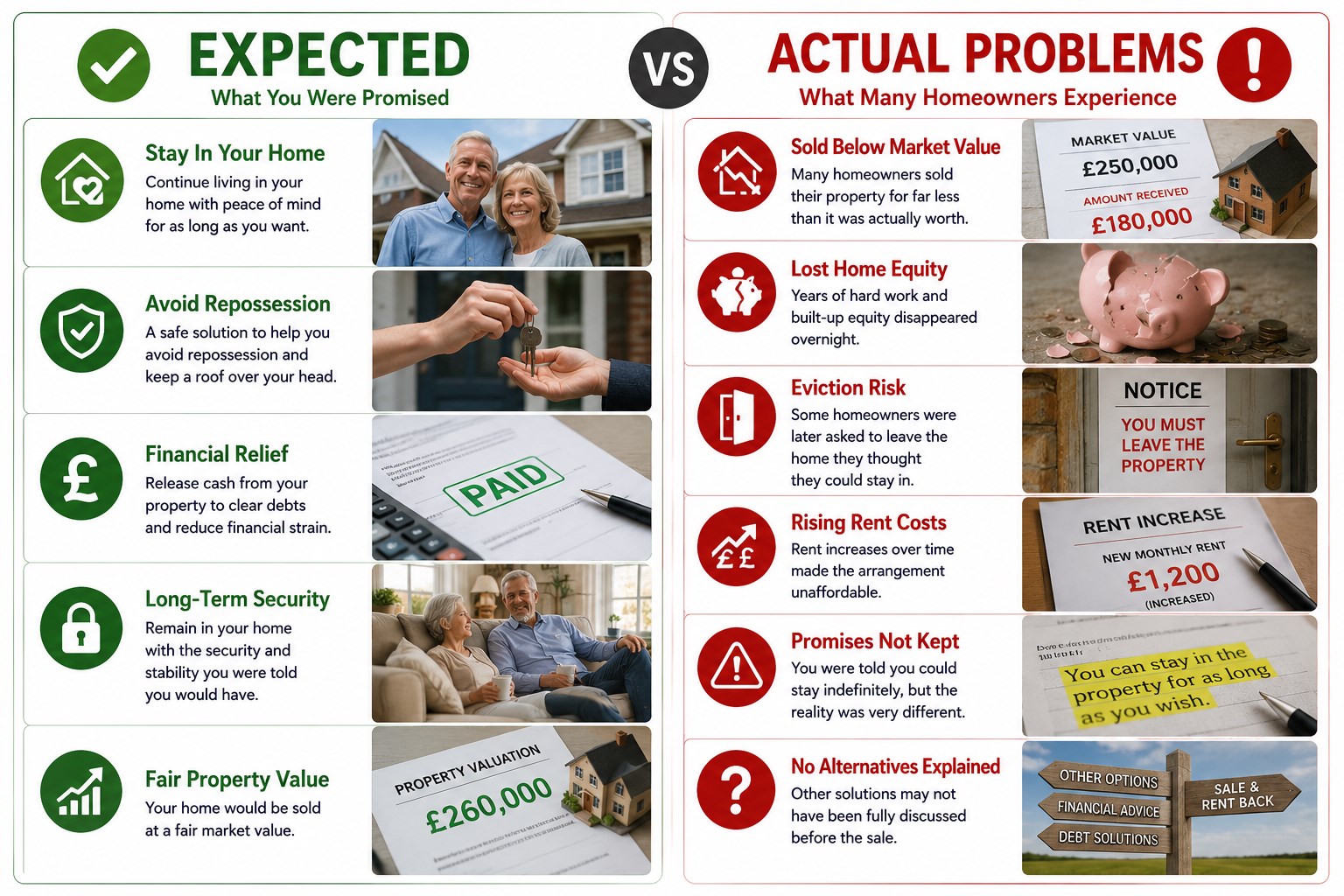
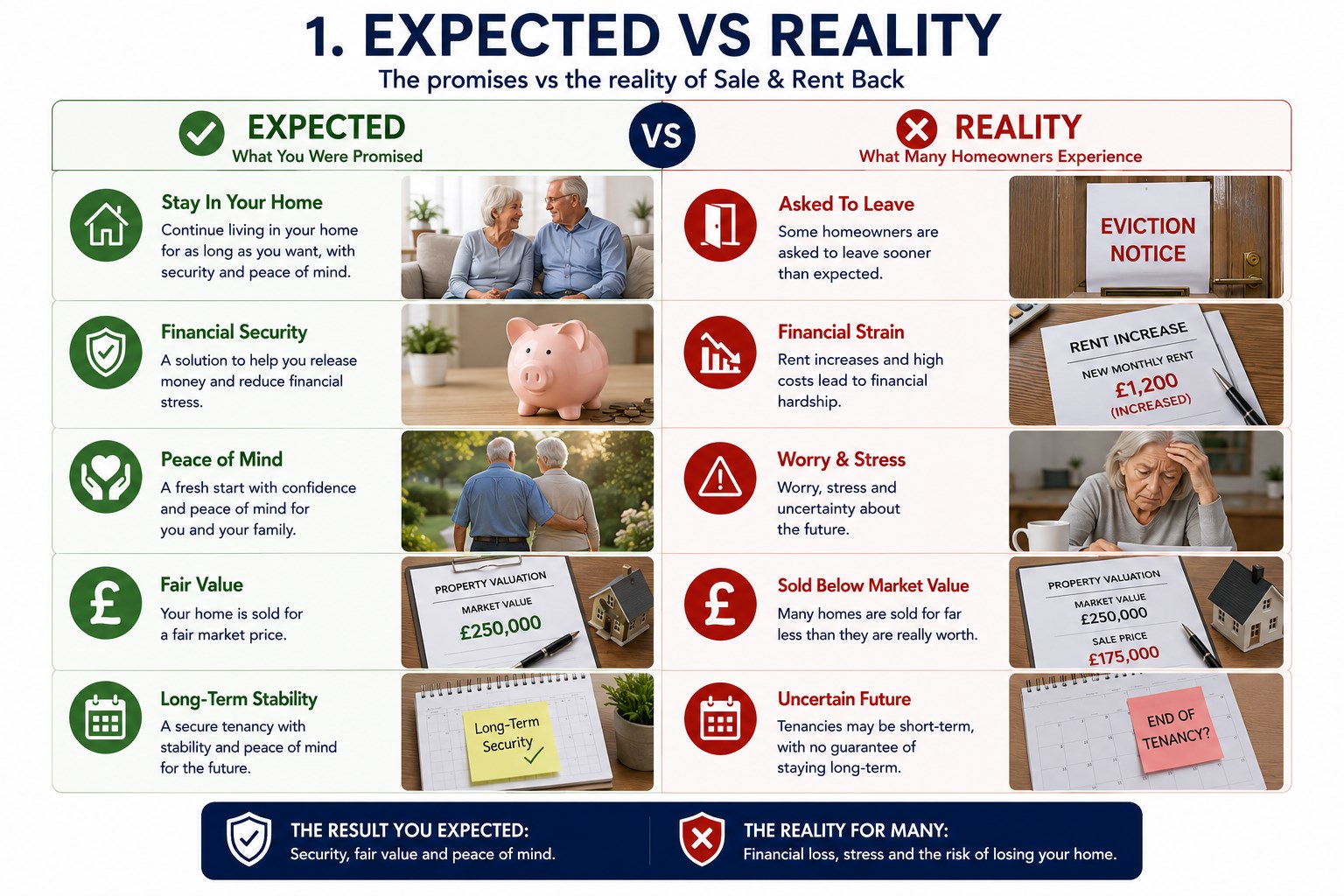
Some homeowners sold their home to stay in it, then lost the security they expected.
A sale and rent back arrangement usually meant selling a property to a company or investor, then remaining in the same home as a tenant. Some people entered these schemes while under pressure from arrears, repossession threats or financial difficulty.
Common concerns
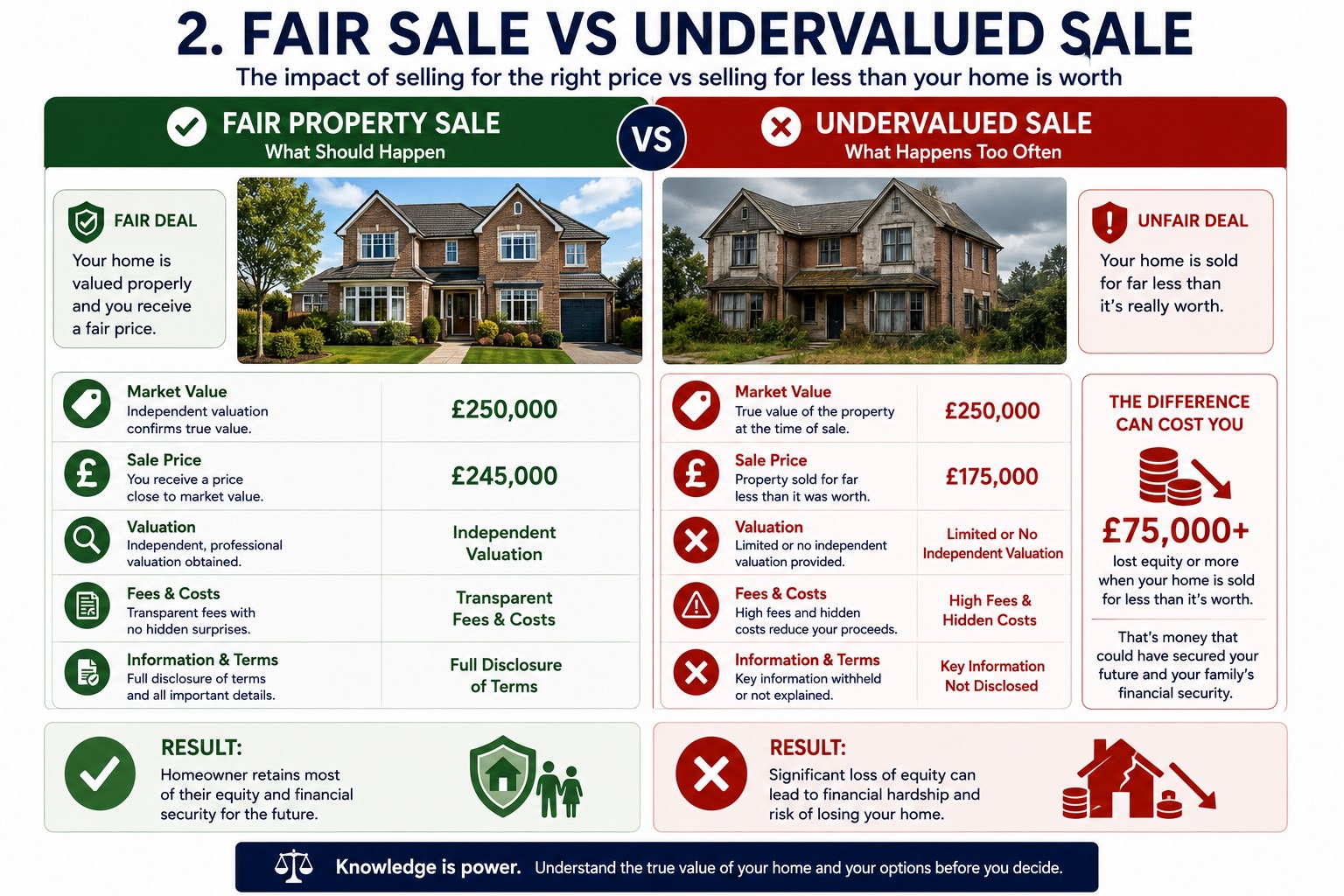
- The property was sold substantially below market value.
- The homeowner believed they could stay indefinitely or long-term.
- Rent rose after the sale or became unaffordable.
- The homeowner was later evicted or had to leave.
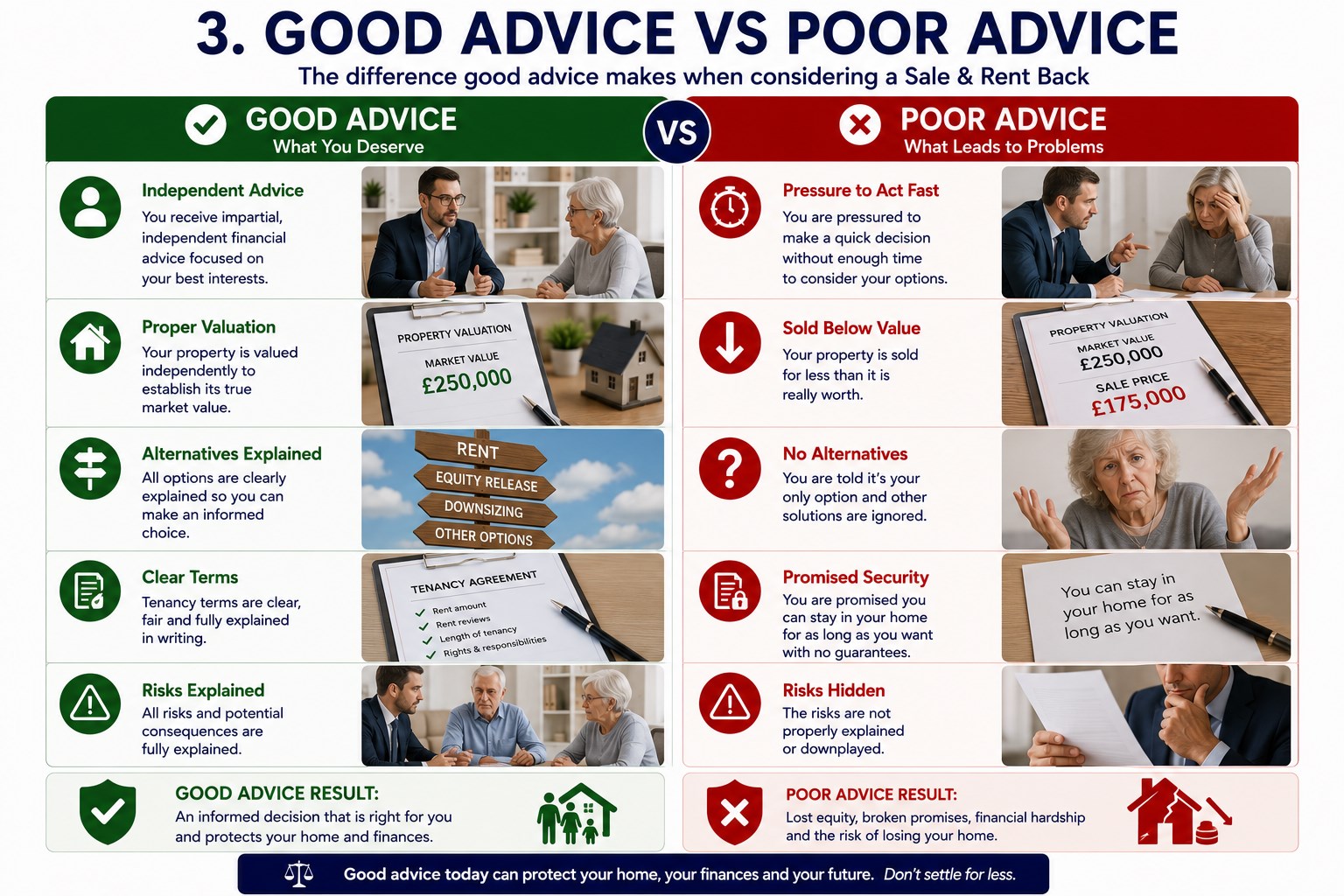
- Alternatives such as repayment plans, mortgage support or regulated advice were not properly explained.
Why these cases need careful review
Many sale and rent back cases are historic. That means limitation, missing paperwork, dissolved firms and lender involvement all need to be checked carefully. A strong review starts with the dates, the property value, the sale price and who advised or pressured the homeowner.
Qualifying questions
What we need to know before a case can be assessed.
The most useful information is often simple: when the sale happened, what the home was worth, what it sold for, and what promises were made about staying in the property.
Sale details
What year did the sale take place? What was the property address? What was the estimated market value and what price did you receive?
Advice and pressure
Were you facing arrears or repossession? Were alternatives discussed? Did a broker, lender, adviser or sale and rent back company recommend the route?
What happened after
Were you promised long-term security? Did rent increase? Were you evicted, asked to leave, or left with a major loss of equity?
Do I qualify?
Quick review checklist
Tick any that apply. This does not decide the case, but it helps show whether a free first review may be worthwhile.
Free estimate tool
Sale & Rent Back Loss Estimate Tool
Use this simple tool to estimate the possible equity shortfall where a home was sold below market value. It is not a valuation, legal opinion or sale and rent back compensation promise, but it can help show whether the case deserves closer review.
Only complete the boxes you know. Approximate figures are fine for a first conversation.
Evidence
Documents that can help show what really happened.
Helpful paperwork
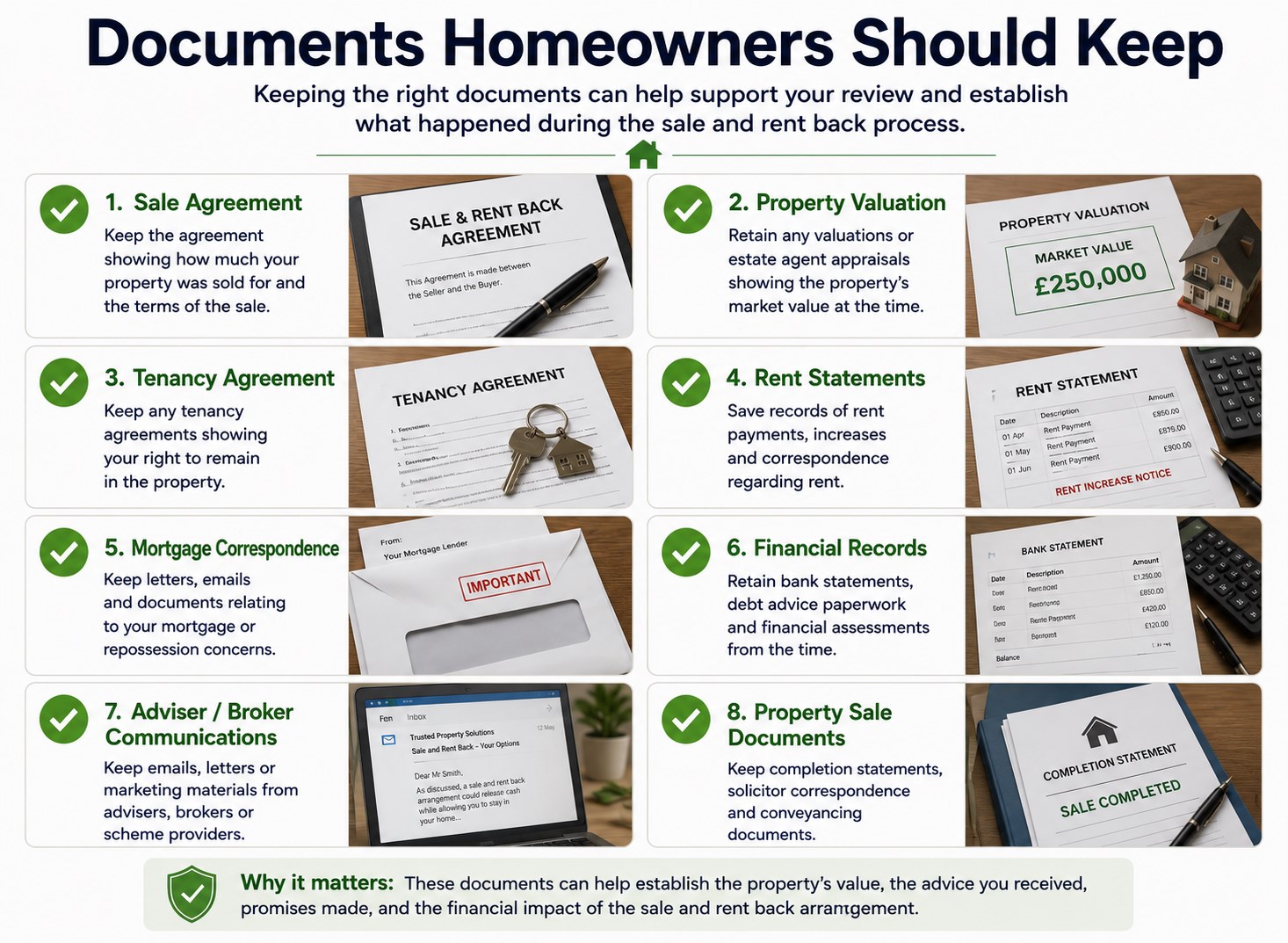
- Sale contract, completion statement or transfer documents.
- Any tenancy agreement after the sale.
- Mortgage arrears, repossession or lender correspondence.
- Broker, adviser or sale company letters and emails.
- Estate agent valuation, survey, Zoopla-style history or local valuation evidence.
- Rent increase, eviction or possession paperwork.
Losses to review
Potential losses may include the difference between market value and sale price, avoidable fees, rent pressure, moving costs, loss of security, and wider financial harm. Sale and leaseback complaints are usually strongest where there is clear evidence of value, advice, pressure and the eventual outcome.
Timeline
A simple timeline helps explain historic cases.
Sale and rent back cases often depend on the order of events, who was involved, and what was promised at each stage.
Responsibility
Who could a claim be against?
Sale and rent back cases can involve more than one party. The right route depends on the documents, dates, advice given and who was involved in arranging the sale.
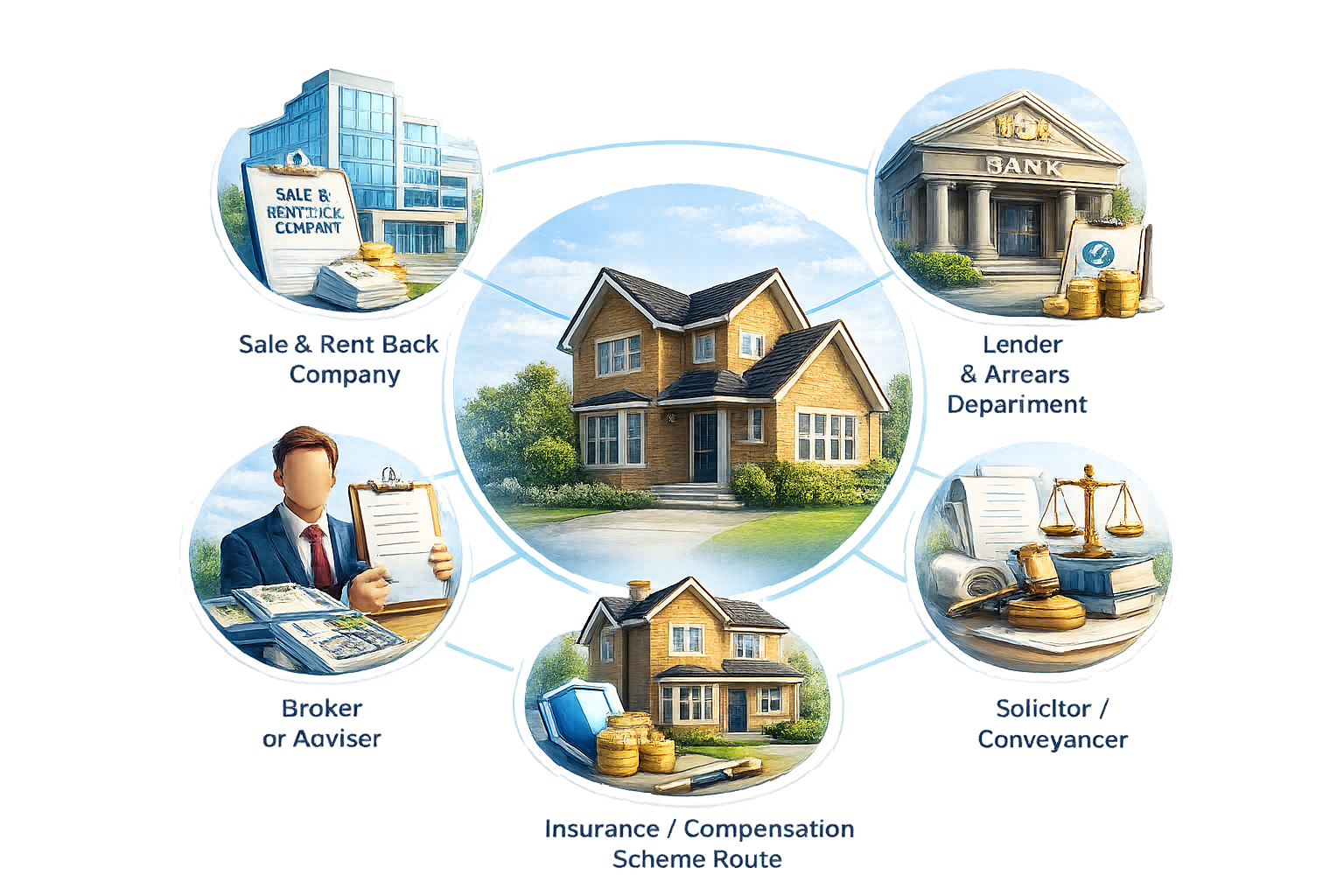
Sale and rent back operator
If the arrangement, sale price, tenancy promise or sale process appears unfair.
Lender or arrears handler
If mortgage pressure, repossession discussions or lender conduct contributed to the decision.
Broker or adviser
Where advice, pressure, options or suitability of the route need to be checked.
Solicitor or conveyancer
Where legal paperwork, explanation of terms or independent advice may matter.
Scheme introducer
Where another person or business introduced the homeowner to the arrangement.
Insurance or compensation route
If the original business no longer exists, there may still be routes to check depending on regulation, dates and records.
Example situations
Fictional examples of issues that may deserve a review.
Undervalued sale
A homeowner sold a property worth around GBP 250,000 for GBP 175,000 while under financial pressure and later discovered the loss of equity was much larger than expected.
Security promise failed
A homeowner believed they could remain long-term, but rent rose and they were later asked to leave the property.
No alternatives explained
A homeowner in arrears was not clearly told about repayment plans, mortgage support, downsizing, regulated advice or other possible options before the sale.
Review process
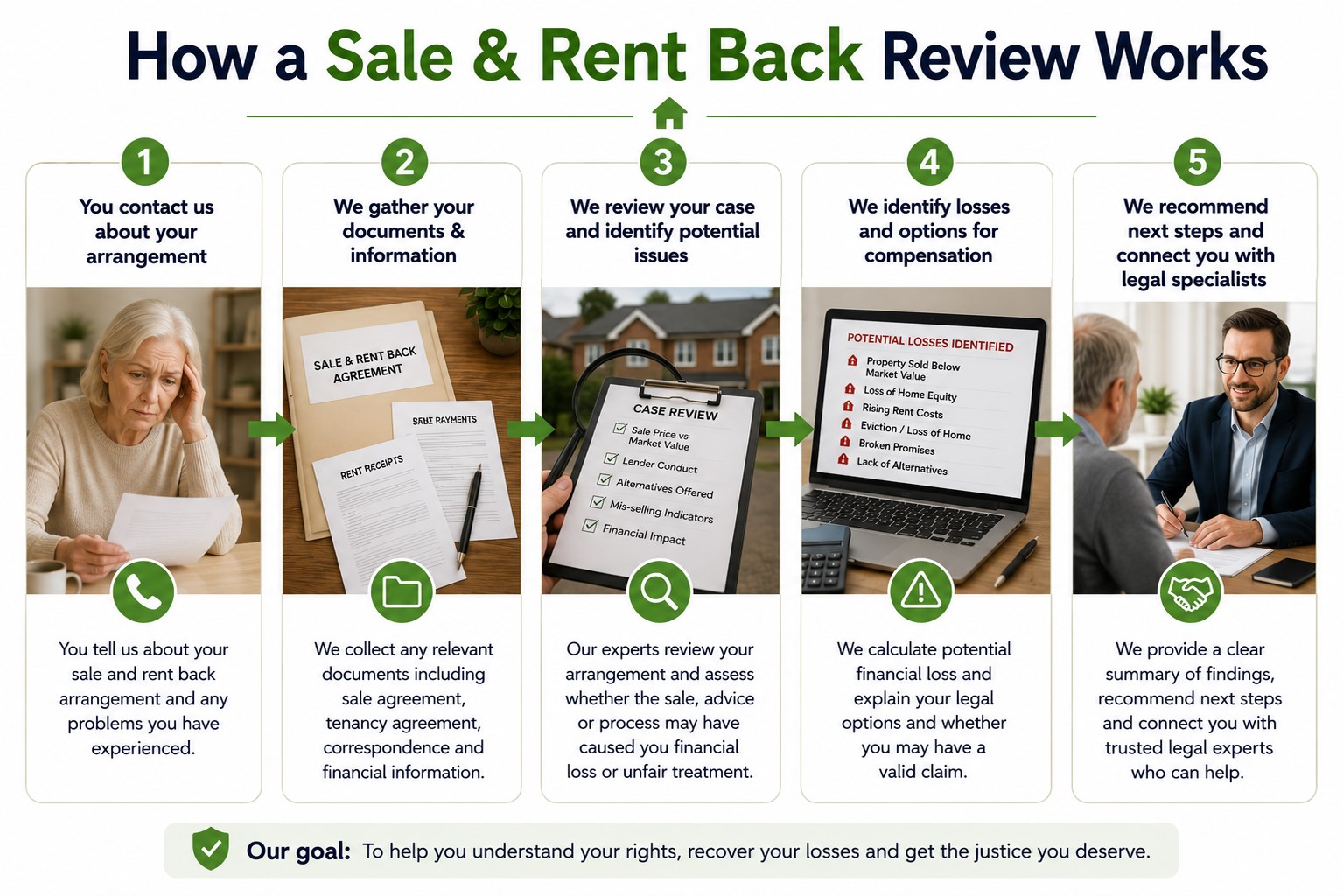
A simple first-stage check before any referral.
Tell us the basics
We ask when the sale happened, who was involved, what was promised and what happened afterwards.
Check the evidence
We look for signs of undervalue, pressure, unsuitable advice, poor explanation of risks or lender involvement.
Explain the next step
If the case appears suitable, we explain whether a specialist legal review may be available.

Prefer a call back?
Request a call back about a sale and rent back review
If you are unsure whether the arrangement fits, leave your details and our intake team can call you back before you complete the full review form.
Please save our number as Quaerens before requesting a call back, so you will recognise our calls. In the UK, save it as 020 8050 0725. Outside the UK, save it as +44 20 8050 0725.
Common review themes
The review often turns on value, advice and the promises made.
Questions
Sale and rent back claim FAQs
What is a sale and rent back arrangement?
It usually involved a homeowner selling their property to a company or investor and then remaining in the property as a tenant.
Can older cases still be reviewed?
They can be considered, but older cases need careful checks around dates, limitation, available evidence and whether the responsible firm or lender route still exists.
What if the sale and rent back company no longer exists?
That does not automatically end the review. The case may still need to consider lenders, brokers, advisers, scheme operators, complaint routes or other responsible parties.
What makes a case stronger?
Evidence that you sold below market value, were under pressure, were promised long-term security, were not told about alternatives, or later faced rent increases or eviction can all be important.
Take the next step
Start Your Sale & Rent Back Case Check
If you sold your home and rented it back, begin a free review and find out whether the circumstances deserve closer assessment.
Start Free Case Check