Evidence before opinion
We compare what was represented with what happened and what the documents support.
Analytics cookies
We use Microsoft Clarity to understand page performance. You can accept or reject analytics cookies. Privacy policy

Solar assessment support
If your solar system has not matched what you were told, the first step is understanding the installation, finance, performance, paperwork and evidence together.
Create a structured preliminary Solar Assessment Report, or speak to Quaerens if you would prefer help first.

We compare what was represented with what happened and what the documents support.
Quaerens provides structured assessment, evidence organisation and complaint support.
Understand the position before deciding whether and how to take another step.
Installer, finance, performance, warranty and property evidence may overlap.
What the assessment can examine
A structured assessment helps separate reported information from documentary evidence and highlights what still needs checking.
Savings projections, generation estimates, export income, payback periods, grant statements and other pre-sale representations.
Point-of-sale finance, monthly repayments, total repayment, affordability information and payment-provider routes.
Underperformance, inverter or battery faults, electrical and roof issues, monitoring records and repairs.
MCS, DNO paperwork, warranty, handover records, finance agreements and complaint responses.
Create your Solar Assessment Report
Answer structured questions about the sales process, system performance, supporting documents and financial impact. Your information is used to prepare a professional preliminary report identifying key facts, evidence gaps, recorded financial exposure and possible next steps.

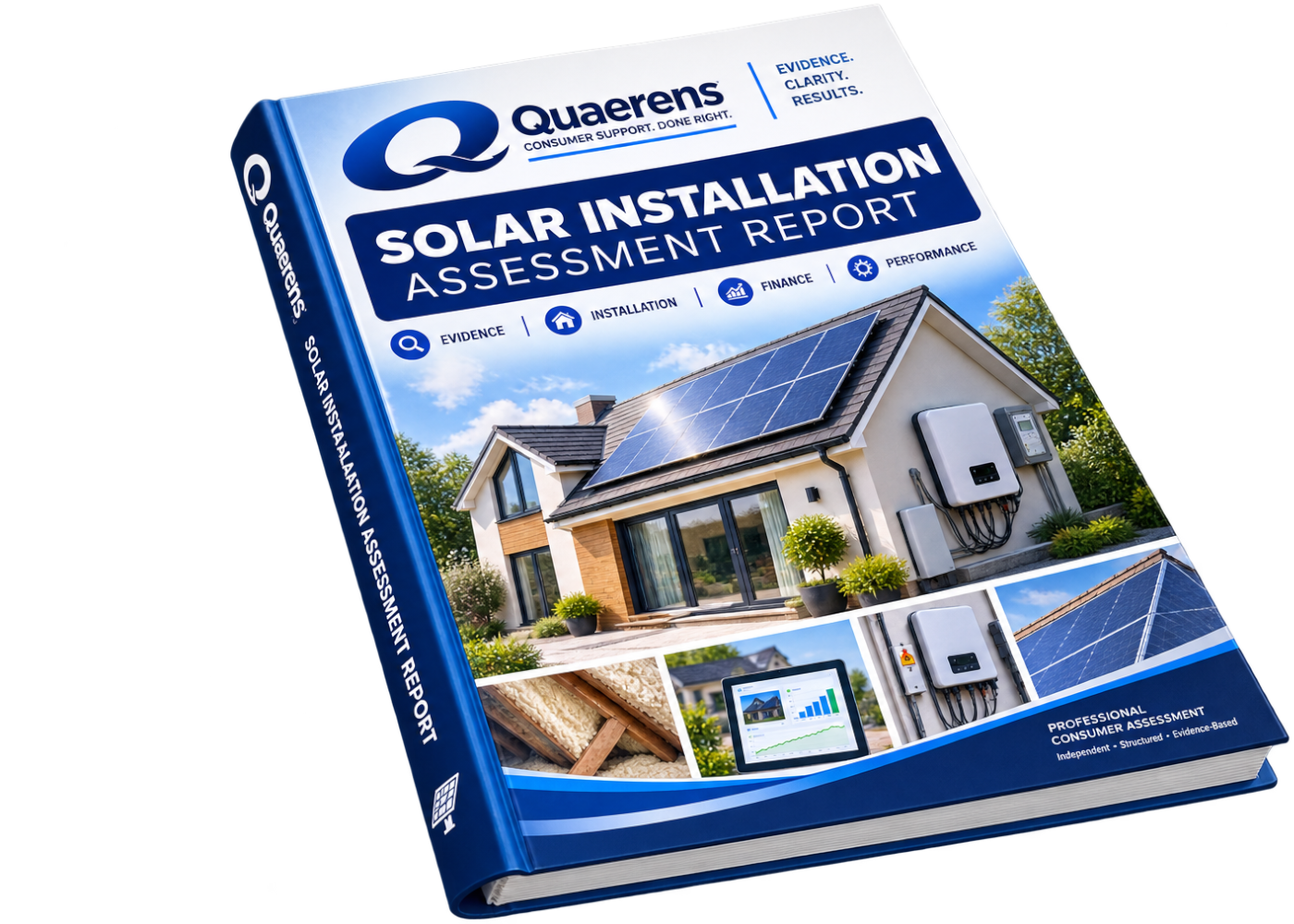
What your report can organise
The report brings the important parts of the dispute together so you can understand the current position more clearly. The artwork is illustrative and does not show a client report.
Common Solar problems
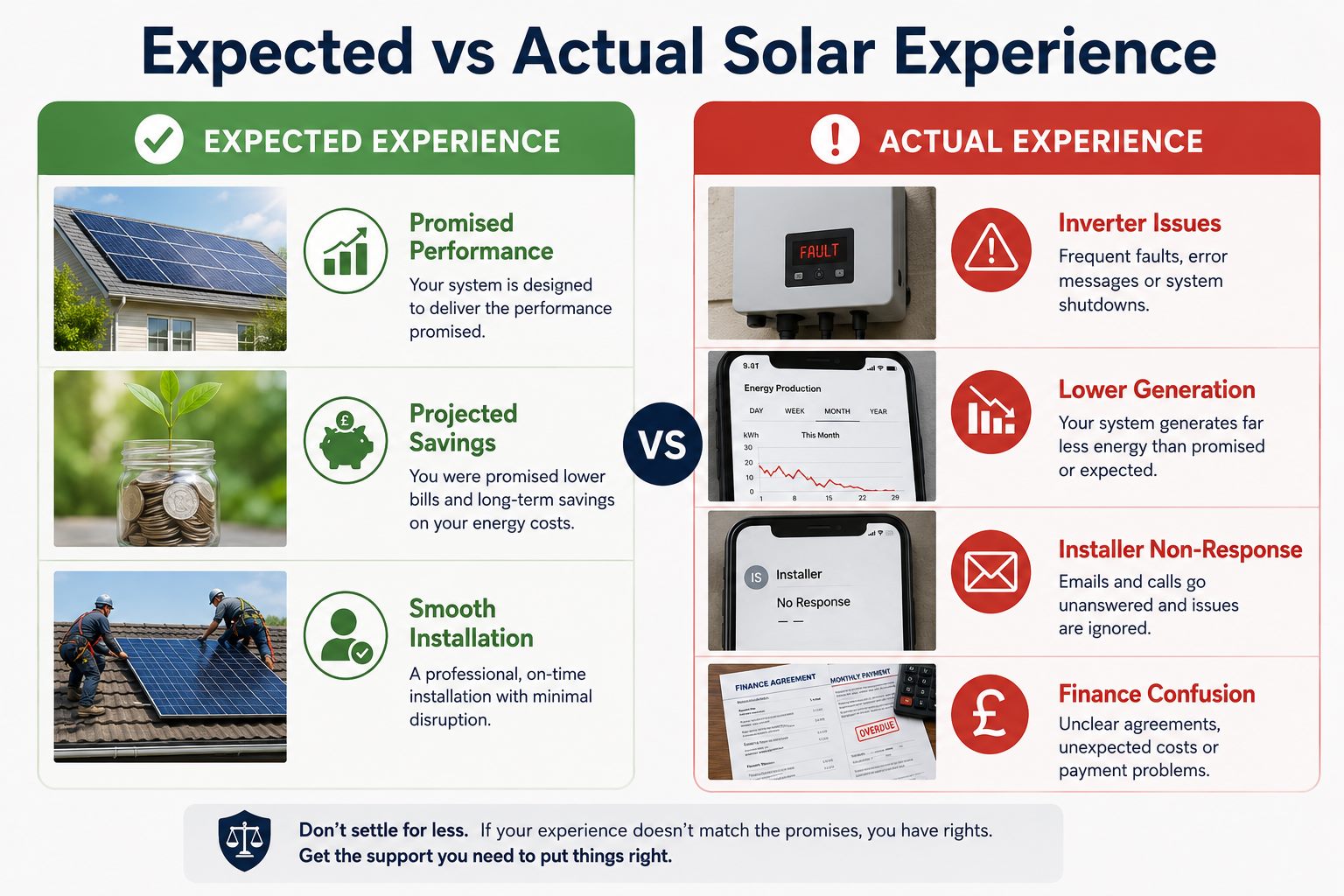
Compare sales illustrations and projected savings with generation, bills, export records and actual performance.
Organise monitoring records, generation data, downtime, faults, repair history and independent evidence.
Review the finance agreement, monthly cost, scheduled total repayment and the evidence of what was explained.
Record roof, electrical, inverter, battery, panel, wiring, monitoring and workmanship concerns.
Separate installer, manufacturer and insurance-backed protections and preserve the correspondence.
Manufacturer, finance provider, warranty, payment and documentation routes may each require consideration.
What evidence matters?
Missing paperwork is not automatic proof of mis-selling, breach or compensation entitlement. Record what exists, what is available now and what still needs verification.
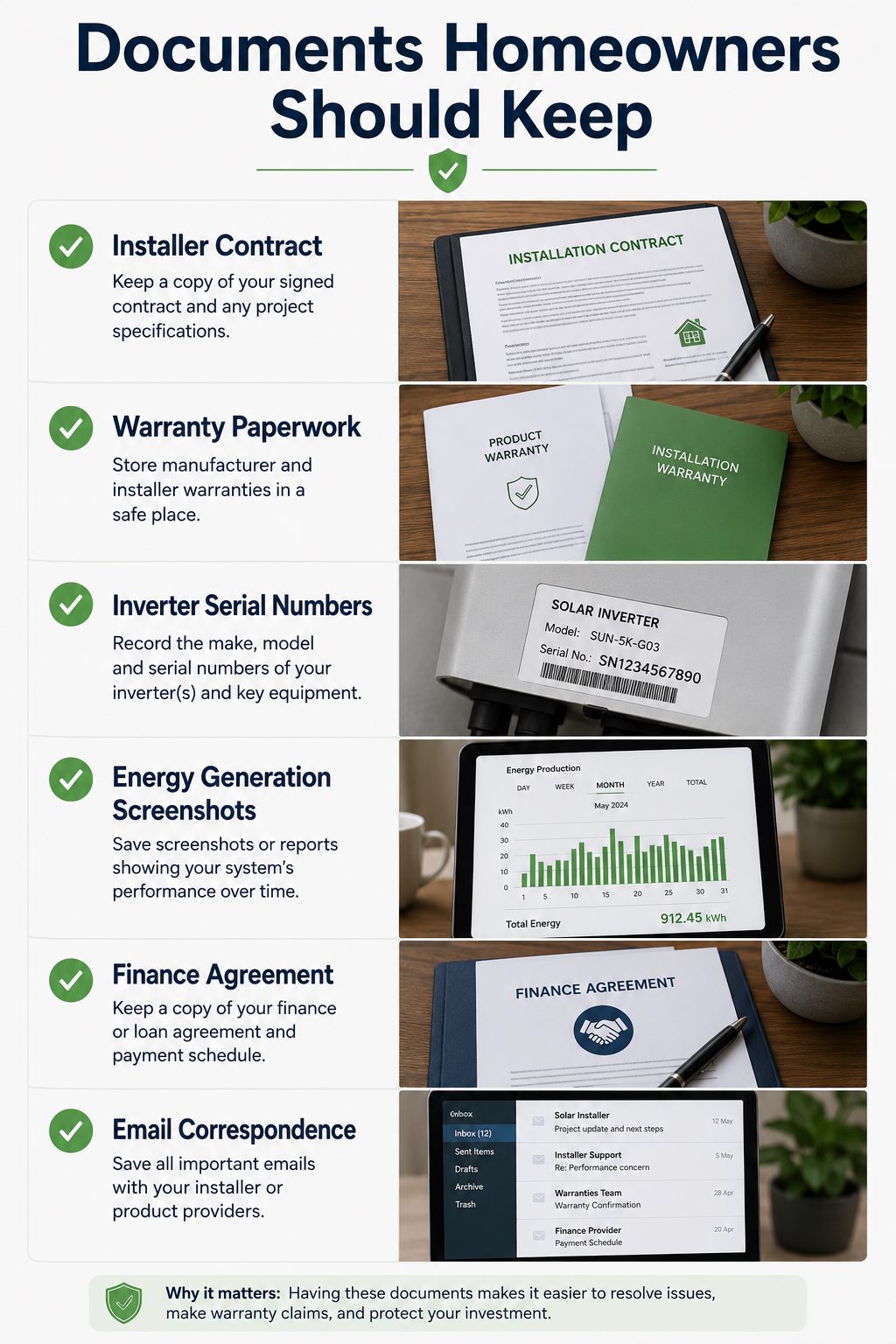
Quote, contract, sales illustration, savings and generation projections, brochure, advertisements, emails and messages.
Finance agreement, pre-contract information, statements, total repayment, deposit evidence and lender correspondence.
Panel, inverter and battery details; monitoring screenshots; generation and export records; bills, faults and repairs.
MCS certificate, DNO/grid paperwork, electrical records, handover pack, warranty, guarantees, photographs and reports.
Installer, lender, warranty and manufacturer complaints, final responses and Ombudsman correspondence where relevant.
System price, payments, outstanding finance, repairs, inspections, remedial work and other evidenced costs or credits.
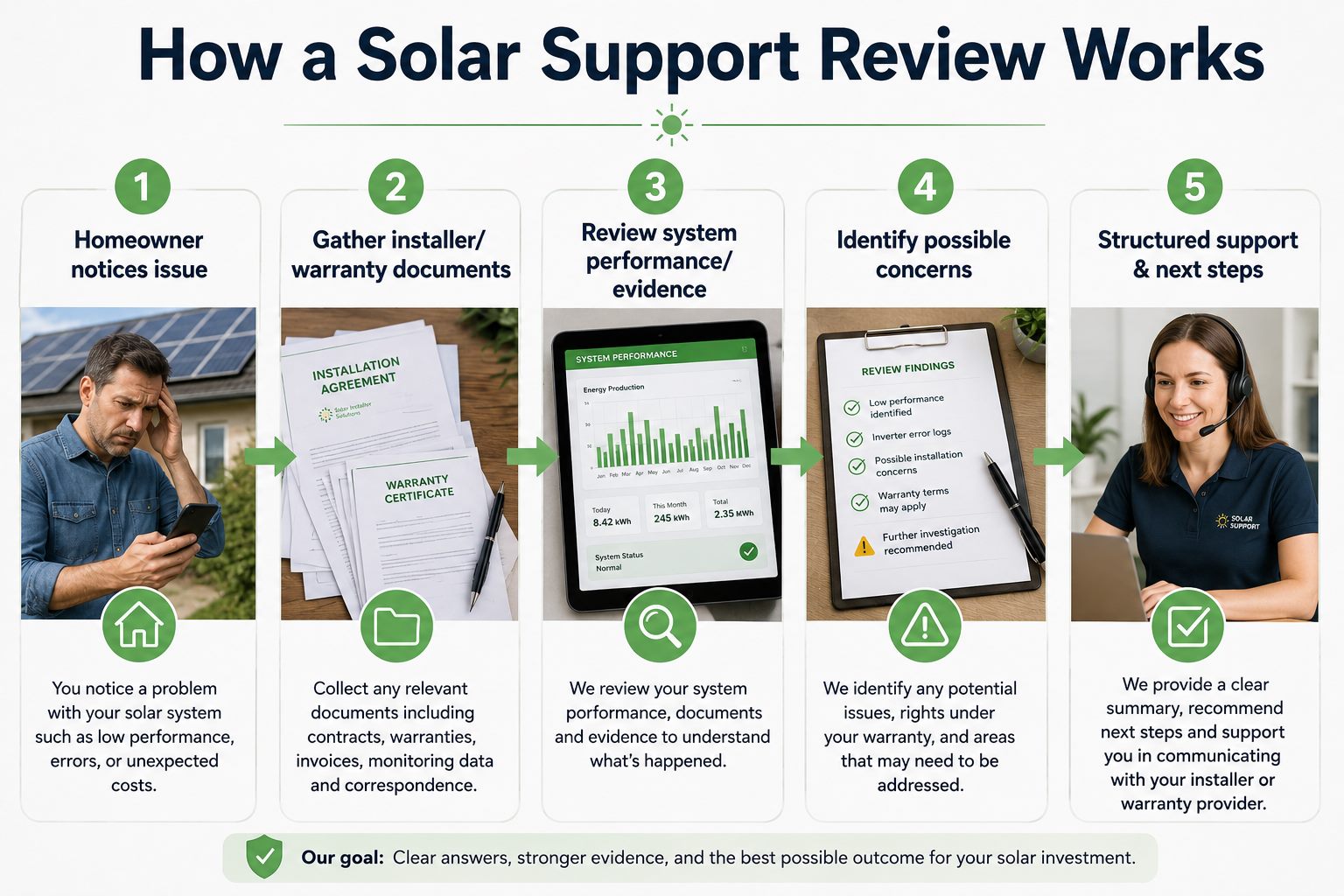
How the assessment works
Record the installer, price, components, finance and relevant dates.
Add savings, generation, finance, warranty and other representations.
Record performance, faults, repairs, payments and complaint responses.
Identify available contracts, monitoring, bills, finance records, correspondence and reports.
The information is organised into the professional Quaerens preliminary assessment format.
The report is only as reliable as the information supplied. It distinguishes consumer-reported information from documentary evidence, identifies gaps and avoids inventing technical facts, liability or financial loss.
Finance, payment and responsibility
Depending on the agreement and evidence, more than one party may need to be considered. An assessment does not automatically assign responsibility.
Representations, installation, technical work, performance, warranties and complaint handling may be relevant.
A lender complaint, connected transaction, Section 75 or Financial Ombudsman route may be relevant depending on the facts and payment structure.
Product warranties, insurance-backed guarantees and manufacturer support may require separate evidence and correspondence.
Record the system price, deposit, repayments, outstanding finance, scheduled total repayment, repair or replacement costs, inspections, remedial works, evidenced additional energy costs and credits already received. These are recorded and classified—not presented as compensation due or a guaranteed claim value.
Property and rent-a-roof arrangements
Leased roof space, rent-a-roof, third-party ownership, missing lease documents, buyer-solicitor queries and lender concerns can affect a sale or remortgage. An arrangement does not automatically prevent a transaction; the documents and current position require review.
Solar Knowledge Hub
Documents, dates and evidence that can help clarify what was represented.
Understand when a credit-card or connected finance route may warrant consideration.
Review finance paperwork, affordability information and lender complaint routes.
Prepare payment, contract and correspondence records for a potential Section 75 route.
Prepare clear, evidence-led wording before escalation.
Frequently asked questions
Prefer to speak to us first?
If you are unsure which documents matter or whether a Solar Assessment is the right next step, leave your details and the Quaerens intake team can contact you.
Save 020 8050 0725 as Quaerens so you recognise our call.
Quaerens focuses first on establishing the facts and preparing the evidence.
Where legal advice or representation becomes appropriate, eligible matters may be referred to our solicitor partner, GSP Law, an independent SRA-regulated firm.
Meet Our Solicitor Partner