
Plain-English summary: Holiday park misrepresentation concerns often begin with what was said before the purchase. A buyer may have relied on statements about rental income, resale value, occupation periods, running costs, park facilities or future developments. This guide explains how to organise those statements and compare them with the paperwork.
This is an informational guide. The main review page remains Holiday Park and Static Caravan Review if you want Quaerens to look at your documents and circumstances.
Key issues and warning signs
- Rental income figures presented as realistic or reliable
- Resale value or investment potential promises
- Statements about future park facilities or developments
- Assurances about site fees, running costs or occupation periods
- Pressure to sign before written information was reviewed
- Verbal promises that later became difficult to prove
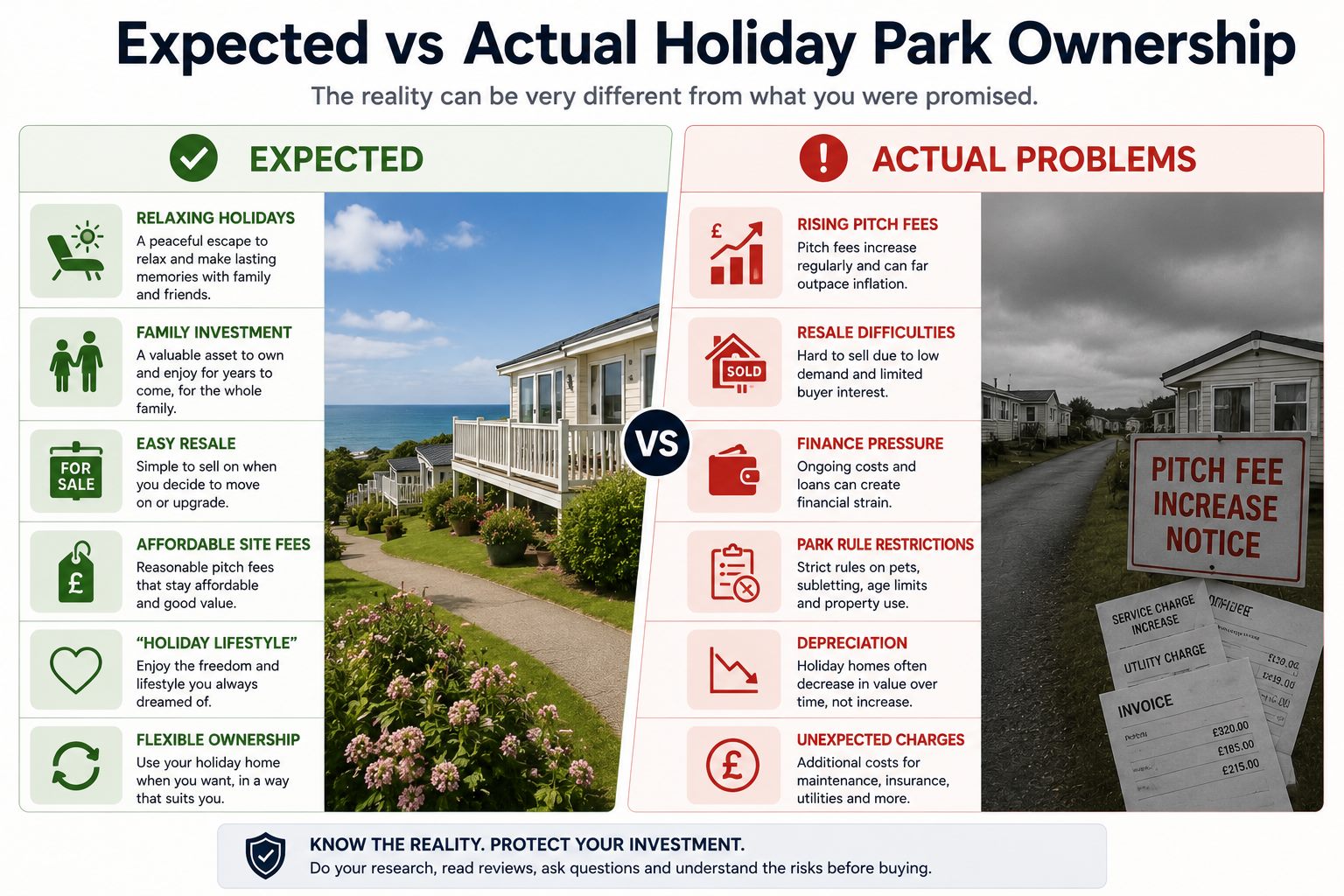
Detailed explanation
A useful review usually separates clear statements of fact from broader sales language. A statement about a specific facility, income figure, fee level or permitted use may need to be compared with brochures, emails, contract terms and later correspondence.
General positive comments are not always enough on their own. The stronger evidence is usually written material, repeated explanations, calculations, signed documents, advertisements, messages or notes made at the time.
Where finance was used, the finance paperwork may also matter. The full cost, monthly payments, deposit, part-exchange terms and assumptions about rental income can all affect how the purchase was understood.
These issues often overlap with broader holiday park dispute review concerns, but this guide focuses on the specific topic so it does not duplicate the main commercial page.
Common examples
Example 1
A salesperson said rental income would cover most annual costs, but later booking figures and site fees did not support that statement.
Example 2
A buyer was told the caravan could be resold easily after a few years, but later discovered age limits, commission and park approval rules.
These are illustrative fact patterns only. They do not describe guaranteed outcomes or imply that every similar case has a valid complaint.
Evidence checklist
Having these documents available can make the review clearer. You do not need every document before contacting us.
- Purchase agreement
- Sales brochures and advertisements
- Rental income projections
- Emails, text messages and handwritten notes
- Finance agreement and affordability documents
- Site fee schedules
- Screenshots of listings or promotional claims
- Complaint correspondence and final responses
Practical steps you can take
- Write a timeline from first enquiry to signing.
- Separate verbal promises from written evidence.
- Request copies of missing sales documents if you do not have them.
- Keep finance, site-fee and resale evidence in separate sections.
- Avoid overstating the position; focus on what the documents show.
What may weaken the position?
- No written evidence of the statement relied on
- Documents signed later that clearly contradict the alleged promise
- Long delays without explanation
- Evidence showing the buyer was advised to take independent checks but did not do so
What Quaerens can review
Quaerens can review the sales timeline, written representations, finance documents, fee evidence and complaint correspondence to identify the issues raised by the available evidence and the routes that may be worth considering.
What Happens Next?
Submit your summary
You submit a summary of the issue and any documents already available.
We review the evidence
We review the purchase, contract, correspondence and evidence.
We discuss gaps
We contact you to discuss the circumstances and any information gaps.
We explain routes
We explain the complaint or support routes that may be worth considering based on the available information.
Frequently asked questions
Can I complain about something the salesperson told me verbally?
Verbal promises can matter, but they are usually stronger when supported by notes, emails, brochures, calculations, witnesses or later conduct. A review should explain what evidence supports the point.
What if the brochure looked different from the contract?
Both documents should be kept. The timing, wording and whether the difference was explained can be relevant to a document review.
Does an income forecast guarantee rental earnings?
Not usually. The wording matters. A forecast, estimate or illustration may be treated differently from a specific promise about achievable income.
Can future facility promises be relevant?
They can be relevant if the promise was specific, relied on before purchase and later changed or did not happen. Evidence of what was said is important.
What documents should I keep?
Keep the agreement, park rules, sales material, finance documents, income projections, messages, call notes, fee schedules and complaint replies.
Does Quaerens guarantee an outcome?
No. Quaerens can help organise documents and explain possible complaint or support routes based on the available evidence, but outcomes depend on the facts and documents.
Related guides
Static Caravan Not As Described
Guidance for static caravan not as described issues, including condition problems, missing features, damp, leaks, snagging evidence and complaint preparation.
Holiday Park Finance Problems
Guidance on static caravan finance problems, affordability, commission concerns, linked finance complaints, monthly costs and evidence to review.
Holiday Park Resale Problems
Guidance on static caravan resale problems, low buyback offers, park resale restrictions, commission, depreciation and evidence from the original sale.
Holiday Park Site Fee Disputes
Practical guidance on holiday park site fee disputes, pitch fees, service charges, utility costs, fee increases, arrears and evidence to keep.
Holiday Park Knowledge Hub
Browse the full set of static caravan and holiday lodge guidance.
Main Holiday Park Review
Use the main page for a full document and circumstances review.
Request My Free Holiday Park Review
Send a short summary of what happened and the documents you have. Quaerens will explain whether structured review support appears appropriate.
Request My Free Holiday Park ReviewImportant note
This guide is general information for document organisation and complaint preparation. It does not promise compensation, a refund, contract cancellation or any specific outcome. The available routes depend on the agreement, evidence, dates, parties involved and individual circumstances.